
The Alloy vs. Devin debate really comes down to timing. Devin works when you already know what you're building and want an AI agent to handle repetitive dev work. Alloy works when you're still figuring out what to build and need a way to test ideas without burning engineering cycles. Most product teams lose time in that discovery phase, shipping features that miss the mark because feedback came too late. If that sounds familiar, Alloy's approach makes more sense than jumping straight to code.
TLDR:
- Alloy prototypes from your real design system in minutes; Devin generates code.
- Product teams use Alloy to validate ideas before engineering builds anything.
- Devin fits engineering teams automating backlog tasks with defined scope.
- Alloy sessions are shareable links anyone can test without setup or handoff.
- Alloy is a Cloud Agent for rapid prototyping; built to prevent wasted dev cycles.
What Is Devin?
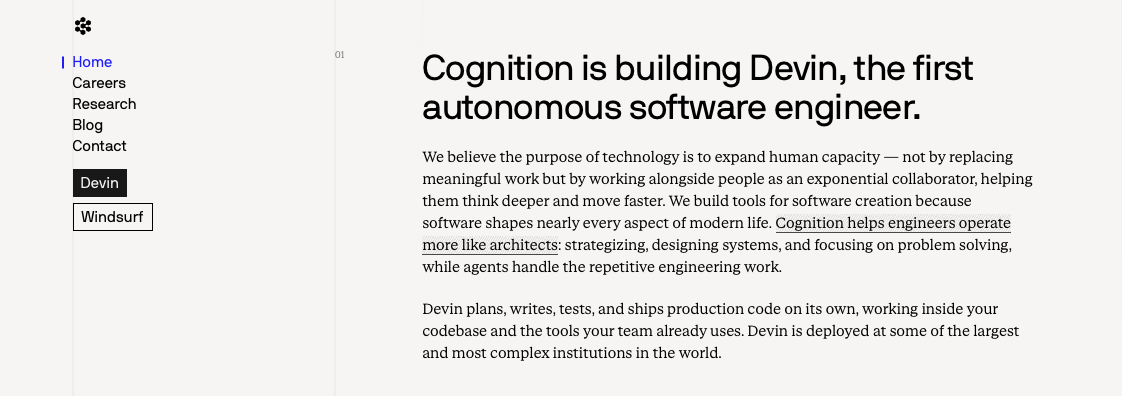
Cognition is the applied AI lab best known for building Devin, an autonomous AI software engineer. The pitch is straightforward: give Devin a ticket, and it handles the rest. Writing code, running tests, debugging failures, iterating on implementations: Devin is designed to take on complete software development tasks from start to finish.
Devin operates inside a sandboxed development workspace where it can plan work, set up environments, write and test code, and debug on its own. It connects to tools like Linear and Jira, picks up tickets, and attempts to see them through to completion without hand-holding.
How Devin Approaches Software Tasks
Devin's core thesis is that software development is a reasoning-intensive task, one that AI can own end to end. Devin is the expression of that belief: an agent built to replicate the work of a human engineer tackling a backlog.
- Devin reads and interprets tickets from project management tools, forming a plan before writing a single line of code.
- It spins up its own environment, installs dependencies, and executes tests iteratively until failures are resolved.
- When something breaks, Devin debugs autonomously, cycling through hypotheses without requiring a human to intervene.
What Is Alloy?
Alloy is a Cloud Agent for product teams who want to design, prototype, and iterate on their actual product. Instead of working locally or in a disconnected design tool, Alloy connects directly to your live codebase and design system, so prototypes closely reflect your production UI and behavior.
At its core, Alloy is built around an AI-powered agent that understands your product context and excels at AI prototyping. It captures your real components, tokens, and patterns, then uses that knowledge to generate prototypes that reflect your actual UI instead of generic wireframes.
Here is what sets Alloy apart for product teams:
- Teams can go from idea to interactive prototype without leaving the browser, removing the back-and-forth between designers and engineers.
- Because Alloy is grounded in your real design system, prototypes require far less cleanup before handoff, saving meaningful time in the product cycle.
- The agent builds context around your product over time, making each successive prototype faster and more accurate to your existing patterns.
Alloy is built for teams who find that traditional prototyping tools produce outputs that feel disconnected from the real product, slowing down decision-making and increasing rework.
Product Development Approach
Alloy and Devin take fundamentally different approaches to building their products, and those differences shape what each tool is actually good at.
Devin built Devin as an autonomous software engineer, one that can write code, run tests, browse the web, and ship changes with minimal human input. The focus is on replacing or augmenting the developer role itself.
Alloy is built around a different belief: that the most valuable work in product development happens before a single line of code is written. The tool focuses on rapid prototyping that stays true to your actual design system, so teams can validate ideas and align stakeholders early.
Where Each Tool Fits in the Workflow
- Devin targets the execution layer, helping engineering teams move faster once a direction has been decided.
- Alloy targets the discovery layer, giving product and design teams a way to test concepts before committing to build.
These are genuinely different problem spaces, which means the right choice often depends on where your team's bottleneck actually lives.
| Feature | Alloy | Devin (Devin) |
|---|---|---|
| Primary Use Case | Rapid prototyping and product discovery before engineering commits time | Autonomous code generation and completion of defined development tasks |
| Ideal User | Product managers, designers, and founders validating ideas with stakeholders | Engineering teams automating backlog tasks with clear technical scope |
| Output Type | High-fidelity interactive prototypes using your actual design system components and tokens | Production-ready code, pull requests, and test suites in your repository |
| Workflow Focus | Discovery phase: testing concepts, aligning stakeholders, efficient dev cycles | Execution phase: writing code, running tests, debugging, shipping defined features |
| Feedback Loop | Shareable browser links anyone can test and comment on without technical setup | Pull request reviews requiring engineering context to interpret and iterate |
| Integration Approach | Connects to design system and codebase to generate accurate prototypes, not production code | Deep repository integration to read, write, and edit code files autonomously |
Collaboration and Feedback Workflows
Product managers and customers can't test a prototype directly, meaning someone always needs to convert their input into a technical spec before Devin can act on it.

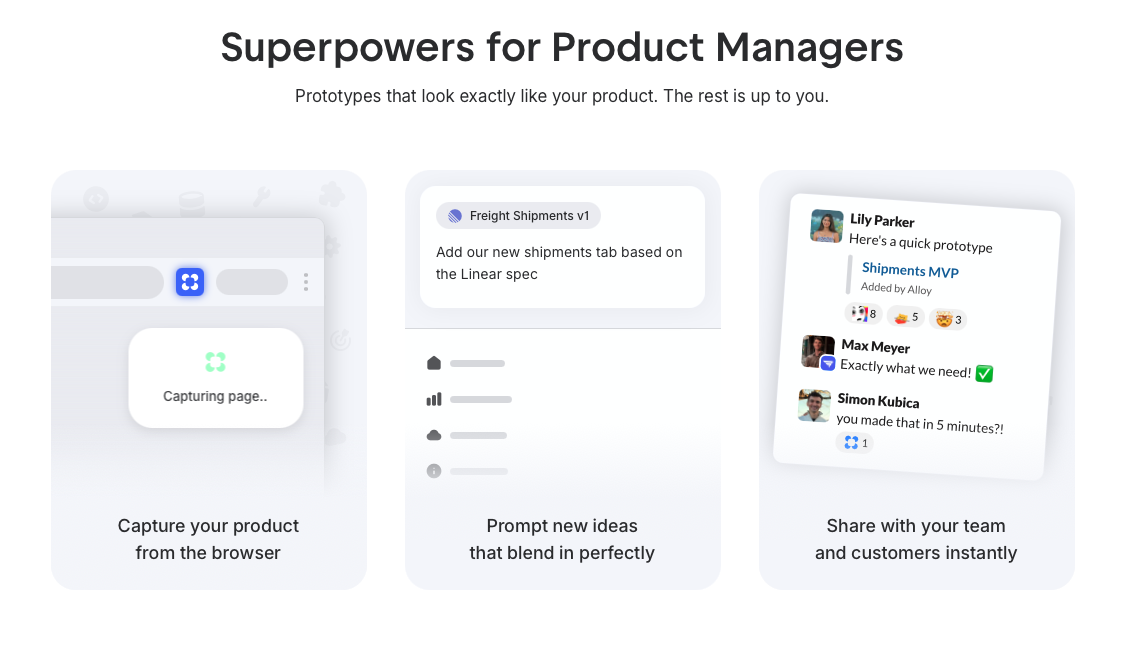
Alloy's workflow skips that conversion step entirely. Every session produces a shareable link that anyone can open in a browser, no install required. Stakeholders can click through real interactions and leave comments pinned to specific UI elements, keeping feedback structured and in context instead of scattered across Slack threads and docs.
The Slack integration takes this further. You can launch an Alloy codebase session directly from a conversation thread, turning a customer request into an interactive prototype without switching tools. Sessions can also be shared in header-free mode, showing just the prototype for demos or customer-facing presentations, with no Alloy UI in the way.
Prototyping and Experimentation
Prototyping in AI agent tools has historically been a frustrating experience: generic outputs that look nothing like your actual product, forcing teams to rebuild from scratch before any real testing begins.
Devin's prototyping capabilities are tied closely to its coding agent workflow. Devin can write and iterate on code, but the output is functional instead of visual, meaning design and product teams often work at arm's length from what's being built.
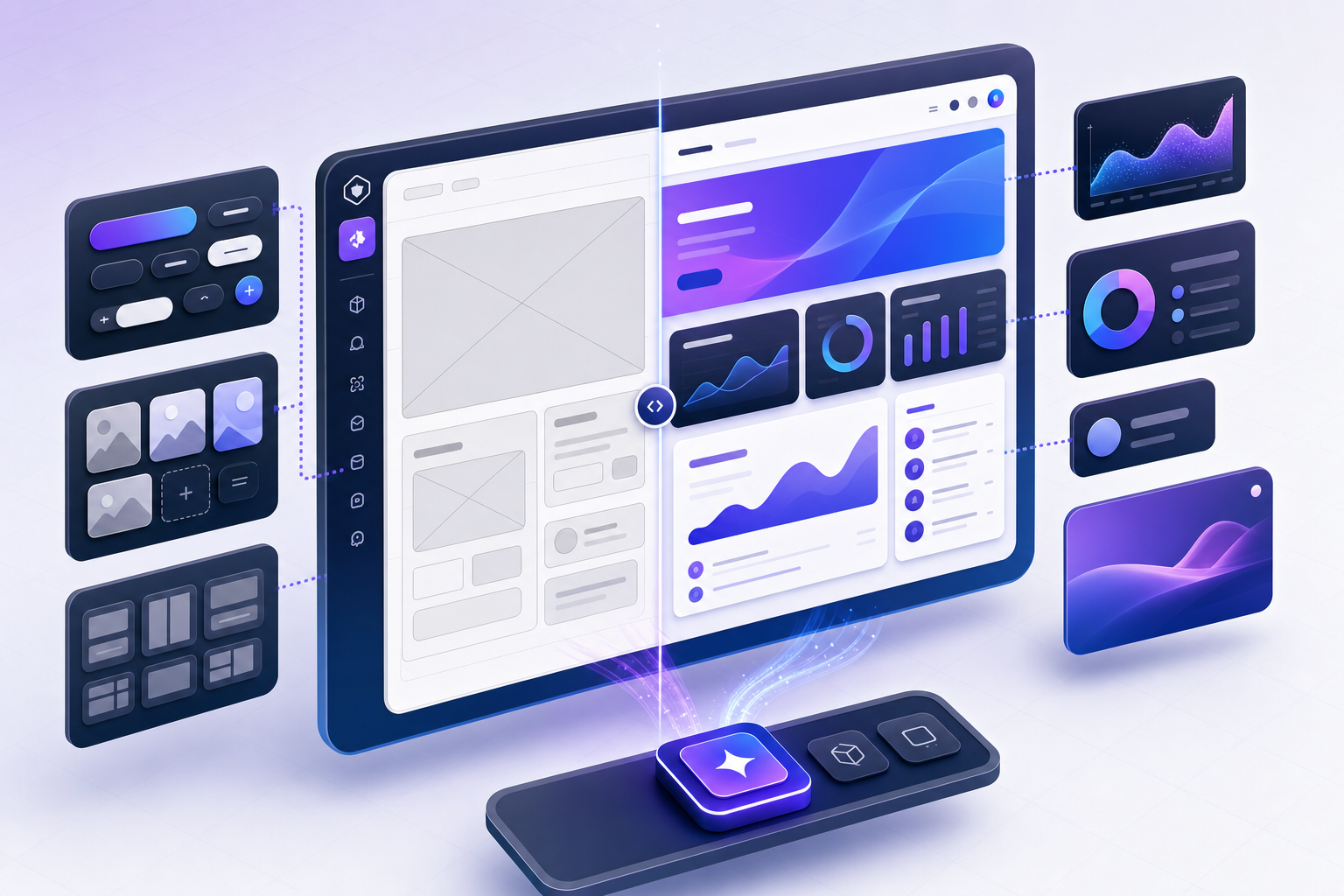
Alloy takes a different approach. Built directly for product teams, it generates prototypes through visual editing that mirror your real design system, so what you see in testing actually resembles what ships. This closes the gap between experimentation and production, letting teams validate ideas faster without the back-and-forth handoff tax.
Key Differences
- Devin (Devin) produces working code, but requires engineering context to interpret and iterate on prototype outputs meaningfully.
- Alloy generates on-brand, product-accurate prototypes using design tokens that non-engineers can interact with, share, and test directly with users.
- Alloy's prototypes are designed to accelerate product discovery instead of code completion.
Codebase Integration and Development Output
Devin's Devin is built around deep codebase integration. It connects directly to your repository, reads existing code structure, and writes or edits files as part of an autonomous development loop. The idea is that a software engineer agent can take a ticket and ship working code with minimal human input.
This makes Devin a strong fit for engineering teams that want to automate repetitive dev tasks, fix bugs autonomously, or prototype in code from the start.
Alloy takes a different approach. Instead of generating production code, it focuses on generating high-fidelity UI prototypes that match your actual design system. Engineers and product teams get accurate, on-brand prototypes they can validate in the discovery phase before writing a single line of code, which reduces the risk of building the wrong thing.
Who This Matters For
- Teams wanting autonomous code generation and repo-level task completion will find Devin more suited to that workflow.
- Teams focused on product discovery, design validation, and reducing back-and-forth between design and engineering will find Alloy a better fit for that earlier stage of the product cycle.
Why Alloy Is the Better Choice
Devin earns its place when engineering teams have well-defined backlogs and want to automate repetitive development tasks. If the bottleneck is execution speed on clearly scoped tickets, autonomous code generation is a reasonable answer.
For product teams, though, the bottleneck usually lives earlier in the cycle. Before any ticket gets written, there are ideas to validate, stakeholders to align, and assumptions to test. Committing to a build before that work is done is where wasted engineering effort comes from.
That's the gap Alloy fills. Here's why it wins for product-led teams:
- Prototypes reflect your real product using actual components, not a generic scaffold, so stakeholders see something that feels real and give feedback that actually matters.
- Non-engineers can interact with, share, and comment on sessions without any setup or handoff friction.
- The feedback loop runs from idea to interactive demo in minutes, not days.
- Discovery happens before engineering commits, not after, which is where time and budget get protected.
If your team ships frequently and needs faster validation cycles, Alloy is the better fit. Devin builds code. Alloy helps you figure out what's worth building in the first place.
FAQs
How should I decide between Alloy and Devin for my team?
If your bottleneck is in the discovery phase (validating ideas, aligning stakeholders, and testing concepts before committing to build) Alloy is the right choice. If you need autonomous code generation for well-defined tickets and your bottleneck is execution speed, Devin may fit better.
What's the main difference between how Alloy and Devin handle prototyping?
Devin produces functional code that requires engineering context to interpret, while Alloy generates high-fidelity prototypes that mirror your actual design system and can be immediately tested by non-engineers. Alloy focuses on product discovery speed; Devin focuses on code completion.
Who is Alloy best suited for compared to Devin?
Alloy is built for product managers, designers, and founders who need to validate ideas quickly with real-looking prototypes before engineering commits time. Devin is better suited for engineering teams that want to automate development tasks on clearly scoped backlogs.
Can non-technical stakeholders interact with Alloy prototypes directly?
Yes. Every Alloy session creates a shareable browser link that anyone can click through, leave comments on, and test without any setup. You can even launch sessions from Slack threads and share them in header-free mode for clean customer demos.
Final Thoughts on AI Tools for Product Teams
Devin works when you need autonomous coding on defined tickets, but most product teams struggle earlier in the cycle. Alloy vs. Devin really comes down to whether you're optimizing execution or discovery. If aligning stakeholders and validating ideas before build is where you lose time, Alloy makes more sense. Try building one prototype and watch how the conversation changes.